
 Pусский

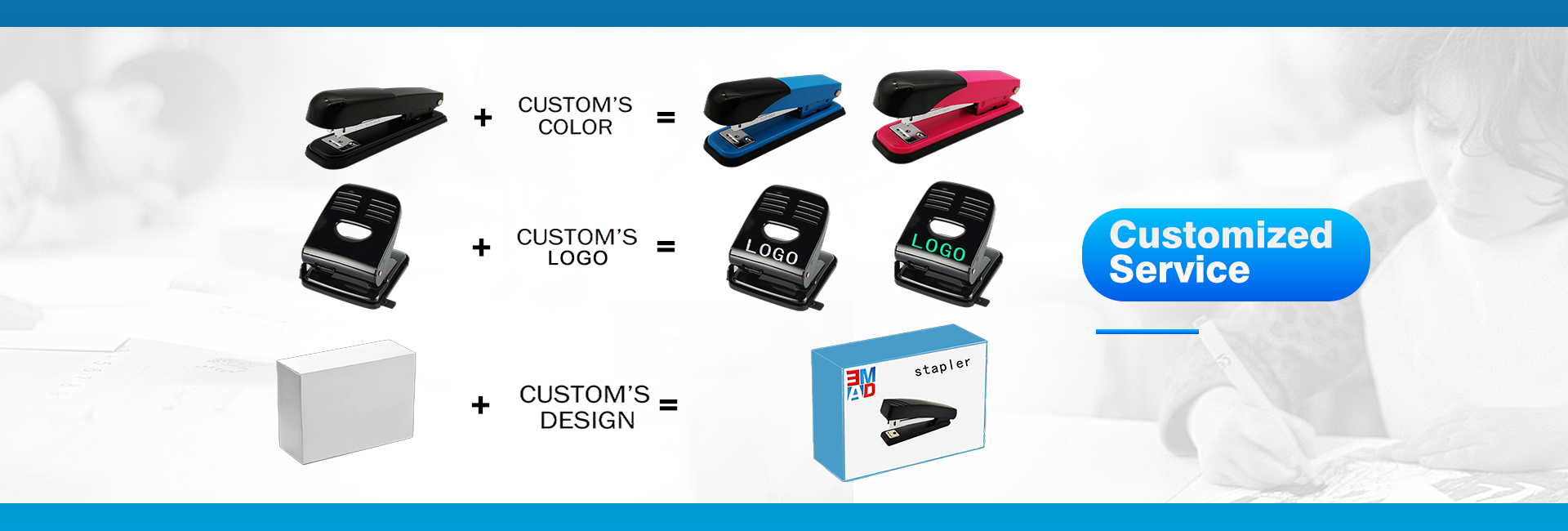
Staplers and hole punches are a type of office supplies and printing equipment primarily used to process and bind document materials. The current status of these industries can be analyzed from multiple perspectives, including market demand, technological development, industry competition, and environmental policies.
In terms of market demand, with the advent of the digital age, many document materials have been converted to electronic formats, resulting in a corresponding decrease in the demand for staplers and hole punches. However, there is still a significant market for these products in fields such as office work, education, publishing, and advertising, where a large amount of document material is still needed for paper-based binding and archiving.
In terms of technological development, the technology for staplers and hole punches is constantly being updated and iterated, with automation and production efficiency being continually improved, while also prioritizing safety and environmental friendliness. For example, photovoltaic control technology and digital computing technology can reduce the labor intensity of operators, improving binding quality and efficiency.
In terms of industry competition, the stapler and hole punch industry has some large enterprises such as Renz in Germany, GBC in the United States, and Emda in China. These enterprises not only innovate in technology but also strengthen their after-sales service and brand influence, maintaining a certain market share.
Regarding environmental policies, with the increasing awareness of environmental protection, relevant departments have standardized and restricted the binding materials and waste gas, waste water, and waste generated in the process. Therefore, stapler and hole punch enterprises need to strengthen the development of environmentally friendly products to reduce their impact on the environment.
In summary, although the stapler and hole punch industry faces certain challenges, enterprises can still maintain a competitive advantage in the market through measures such as strengthening technological research and development, optimizing product structure, improving product quality, perfecting after-sales service, and complying with environmental requirements.
In terms of market demand, with the advent of the digital age, many document materials have been converted to electronic formats, resulting in a corresponding decrease in the demand for staplers and hole punches. However, there is still a significant market for these products in fields such as office work, education, publishing, and advertising, where a large amount of document material is still needed for paper-based binding and archiving.
In terms of technological development, the technology for staplers and hole punches is constantly being updated and iterated, with automation and production efficiency being continually improved, while also prioritizing safety and environmental friendliness. For example, photovoltaic control technology and digital computing technology can reduce the labor intensity of operators, improving binding quality and efficiency.
In terms of industry competition, the stapler and hole punch industry has some large enterprises such as Renz in Germany, GBC in the United States, and Emda in China. These enterprises not only innovate in technology but also strengthen their after-sales service and brand influence, maintaining a certain market share.
Regarding environmental policies, with the increasing awareness of environmental protection, relevant departments have standardized and restricted the binding materials and waste gas, waste water, and waste generated in the process. Therefore, stapler and hole punch enterprises need to strengthen the development of environmentally friendly products to reduce their impact on the environment.
In summary, although the stapler and hole punch industry faces certain challenges, enterprises can still maintain a competitive advantage in the market through measures such as strengthening technological research and development, optimizing product structure, improving product quality, perfecting after-sales service, and complying with environmental requirements.


